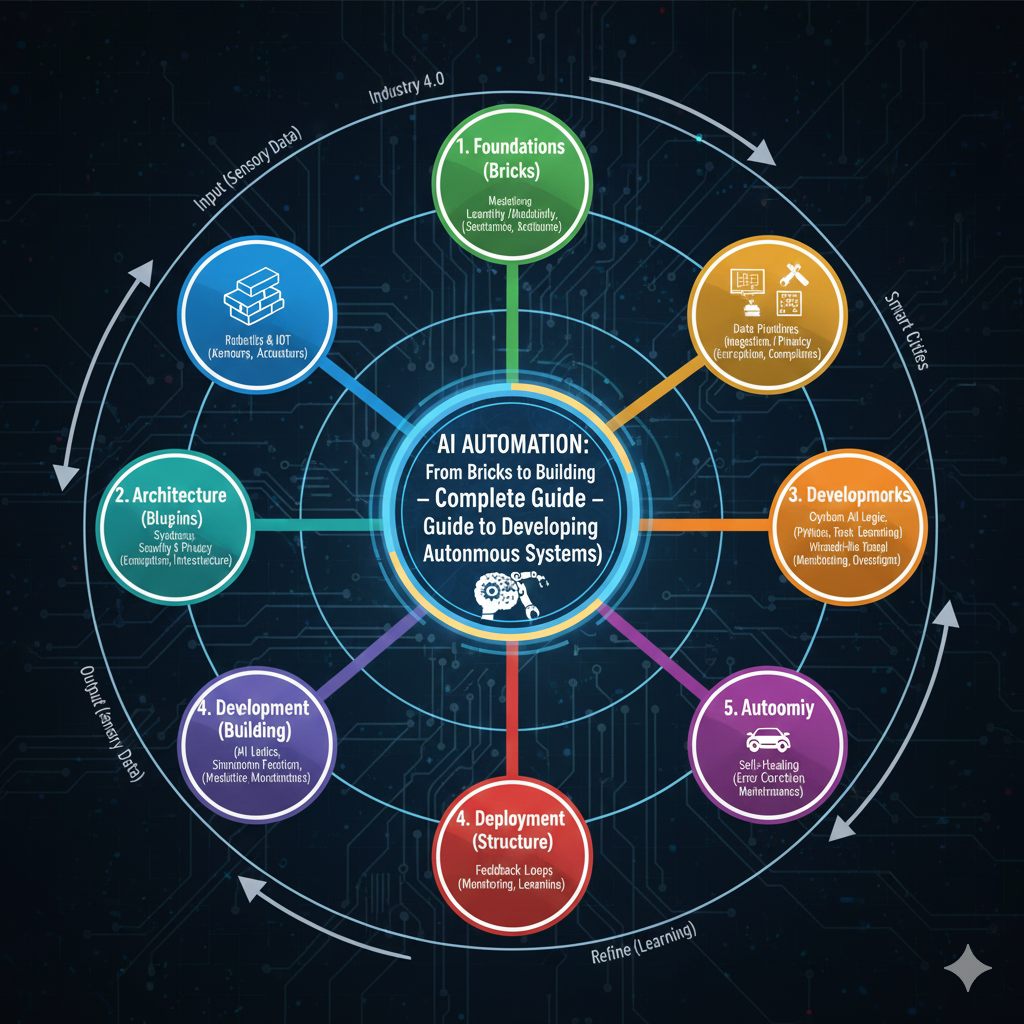
Professional presentation on top 10 AI agents and automation platforms for 2025 including Microsoft Copilot Studio, Salesforce Agentforce, IBM watsonx, n8n workflows for IT DevOps and digital marketing automation with ROI statistics and implementation strategies
๐Ÿš€ THE DEFINITIVE AI AGENTS GUIDE FOR 2026 ๐Ÿš€ Are you ready for the AI automation revolution? US corporate AI spend jumped 6ร— to $13.8 billion in 2024, and the market is projected to grow at 40.72% CAGR through 2030. This comprehensive presentation reveals: โœ… Top 10 AI agent platforms transforming enterprises globally โœ… Microsoft Copilot Studio, Salesforce Agentforce, IBM watsonx.ai analysis โœ… 10 battle-tested n8n workflows for IT & DevOps automation โœ… 10 proven n8n workflows for digital marketing & social media โœ… Real ROI calculations with 273% returns in 3-6 months โœ… Multi-agent systems and autonomous decision-making strategies โœ… Implementation roadmaps from pilot to enterprise scale ๐Ÿ’ก Key Insights: - Save 20+ hours weekly on content creation - Reduce incident response time by 65% - Increase lead conversion rates by 180% - Scale operations without linear cost increases The shift is happening NOWโ€”from reactive chatbots to autonomous agents that perceive, reason, and execute independently. Organizations that act decisively today will establish competitive advantages that compound over time. Those that hesitate will be defined by their competitors' automation. ๐Ÿ“Š Featured: Complete cost comparisons, security frameworks, case studies with measurable results, and your step-by-step action plan. ๐Ÿ’ฌ Question: What's your biggest automation challenge right now? Let's discuss in the comments! #AIAgents #BusinessAutomation #DigitalTransformation #EnterpriseAI #MarketingAutomation #DevOps #RPA #ArtificialIntelligence #TechInnovation #FutureOfWork
AI Agents & Business Automation 2025

๐Ÿค– AI Agents & Business Automation

The Definitive Landscape of 2025
EDUNXT TECH LEARNING
Global Tech Innovation : A pioneer in EdTech solutions
January 2025

๐Ÿ“Š Executive Summary: The AI Agent Revolution

Market Transformation

We are witnessing an unprecedented shift from reactive chatbots to autonomous AI agents that can perceive triggers, reason about actions, and execute complex tasks without constant human intervention. This transformation is fundamentally reshaping how businesses operate across every industry vertical.

6ร—
Growth in US Corporate AI Spend
$13.8B
Total AI Investment (2024)
40.72%
CAGR Through 2030
๐ŸŽฏ Key Insight: The enterprise AI automation market is experiencing explosive growth, with organizations moving rapidly from pilot projects to production-scale deployments. The question is no longer whether to adopt AI agents, but how quickly and strategically organizations can implement them to maintain competitive advantage.

๐Ÿ† Top 10 AI Agent Platforms: Global Leaders

These platforms represent the cutting edge of enterprise AI automation, each bringing unique strengths to different business contexts. Let me walk you through each platform and why they matter.

#1
Microsoft Copilot Studio
Microsoft’s enterprise-grade platform enables organizations to build, govern, and scale AI agents across their operations. With native integration across the Microsoft 365 ecosystem and support for GPT-5 models, this platform offers unparalleled reach and capability. Currently used by tens of thousands of organizations for automating workflows across departments, from finance to HR to operations.

Key Strengths: Enterprise governance, seamless Microsoft 365 integration, GPT-5 support, massive scale capabilities
Best For: Large enterprises already invested in Microsoft ecosystem
#2
Salesforce Agentforce
Salesforce’s specialized AI agent platform leverages its proprietary Atlas Reasoning Engine combined with Data Cloud, designed specifically for Customer 360 data across Sales, Service, and Marketing operations. This platform excels in CRM-centric automation, making it the gold standard for customer-facing business processes.

Key Strengths: Deep CRM integration, Atlas Reasoning Engine, Customer 360 data utilization, sales and service automation
Best For: Organizations prioritizing customer relationship management and sales automation
#3
IBM watsonx.ai
IBM’s enterprise-scale AI platform is recognized as the optimal choice for large organizations requiring reliable, customizable automation with strong governance features. Watson brings decades of enterprise AI experience and is particularly strong in regulated industries like healthcare, finance, and government.

Key Strengths: Enterprise reliability, regulatory compliance, customization capabilities, proven track record
Best For: Large enterprises in regulated industries requiring robust governance
#4
Lindy
Lindy stands out as the ideal platform for everyday automation and no-code workflows, allowing users to create functional AI agents in minutes without any technical expertise. This democratization of AI agent creation has made it incredibly popular among small to medium businesses looking to automate without hiring specialized talent.

Key Strengths: No-code interface, rapid deployment, user-friendly design, affordable pricing
Best For: Small to medium businesses seeking quick automation wins without technical teams
#5
n8n
n8n has become the go-to platform for marketing and business operations automations, offering an open-source solution that scales easily with extensive community support. With over 422 native integrations and a thriving community contributing 2,365+ workflow templates, n8n represents the power of open-source innovation in the AI agent space.

Key Strengths: Open-source flexibility, cost efficiency, 422+ integrations, community-driven innovation
Best For: Cost-conscious enterprises and marketing teams needing flexible, customizable automation
#6
UiPath
Known globally for robotic process automation (RPA), UiPath now incorporates advanced AI agents for intelligent document processing and workflow automation across enterprises. UiPath pioneered the RPA market and continues to lead in combining traditional automation with modern AI capabilities.

Key Strengths: RPA leadership, document processing AI, enterprise workflow automation, mature platform
Best For: Enterprises with significant document processing and repetitive task automation needs
#7
Automation Anywhere
Leading RPA platform with AI-powered intelligent automation capabilities, widely adopted in finance, healthcare, and manufacturing sectors for end-to-end business process automation. Automation Anywhere excels at handling complex, multi-step processes that span multiple systems and departments.

Key Strengths: End-to-end process automation, industry-specific solutions, bot marketplace, cloud-native architecture
Best For: Finance, healthcare, and manufacturing organizations with complex process automation requirements
#8
Kore.ai
Kore.ai provides omnichannel AI agent deployment for large organizations including banks, healthcare providers, and telecom companies. By connecting voice, chat, and workflow automation under one unified platform, Kore.ai enables truly seamless customer experiences across all touchpoints.

Key Strengths: Omnichannel deployment, voice and chat integration, enterprise scale, industry-specific solutions
Best For: Large organizations requiring unified customer experience across multiple channels
#9
Devin AI
Devin AI excels specifically in coding automation, capable of writing and testing its own code like a reliable developer teammate. This represents a breakthrough in software development automation, with AI agents that can understand requirements, write code, debug, and even deploy applications.

Key Strengths: Autonomous coding, code testing and debugging, developer productivity enhancement, rapid adoption
Best For: Software development teams looking to accelerate coding and reduce repetitive development tasks
#10
Glean
Glean specializes in enterprise knowledge management, using AI agents to search across internal systems and provide intelligent information retrieval. For large corporations with extensive data repositories spread across multiple systems, Glean acts as a unified intelligence layer that makes all knowledge accessible.

Key Strengths: Enterprise search excellence, cross-system knowledge integration, intelligent retrieval, large-scale data handling
Best For: Large corporations with extensive, fragmented knowledge bases requiring unified access
๐Ÿ’ก Strategic Consideration: The choice between these platforms typically depends on whether you need vertical depth (like Salesforce for CRM-specific automation) or horizontal breadth (like Microsoft for enterprise-wide automation across all departments). Organizations should evaluate their primary automation needs and existing technology investments before selecting a platform.

๐Ÿ”„ Platform Selection Framework

Decision Factors for AI Agent Platform Selection
AI Agent Platform Selection

๐Ÿš€ Phase 4: Multi-Agent Systems (2026+)

Collaborative agent networks working together. Specialized agents communicating and coordinating. Emergent problem-solving capabilities. Self-organizing workflow optimization.

Critical Market Trends Shaping 2025-2030

1. Shift from Vertical Solutions to Horizontal Platforms
Organizations are increasingly demanding platforms that can automate across multiple departments rather than point solutions for individual use cases. This drives consolidation around platforms like Microsoft Copilot Studio that offer enterprise-wide capabilities versus specialized tools. The market is bifurcating between comprehensive horizontal platforms and deep vertical solutions for specific industries.

Strategic Implications: Companies must decide whether to standardize on a single horizontal platform or maintain a portfolio of specialized vertical solutions. The decision impacts total cost of ownership, integration complexity, and organizational agility.
2. Open-Source vs. Proprietary: The New Enterprise Debate
Open-source platforms like n8n are challenging proprietary vendors by offering transparency, customization, and cost advantages. Enterprises are increasingly comfortable with open-source foundations for critical infrastructure, especially when they enable self-hosting and complete data control. This trend accelerates as data privacy regulations tighten globally.

Strategic Implications: Organizations must weigh the benefits of vendor support and managed services against the flexibility and cost savings of open-source solutions. Hybrid approaches combining open-source foundations with commercial support are emerging as viable middle ground.
3. No-Code/Low-Code Democratization
The barrier to entry for AI agent creation continues to plummet. Platforms like Lindy enable non-technical users to create sophisticated automation in minutes. This democratization shifts AI agent development from specialized IT teams to business users who understand processes intimately. The result is faster innovation and more contextually relevant automation.

Strategic Implications: IT departments must transition from gatekeepers to enablers, providing governance frameworks while empowering business users. Organizations that successfully democratize AI agent creation will achieve competitive advantages through rapid innovation cycles.
4. Multi-Agent Orchestration Emerges as Core Competency
The future isn’t single AI agents but coordinated systems of specialized agents working together. Organizations building multi-agent orchestration capabilities will handle complexity that single agents cannot address. This requires new architectural thinking, inter-agent communication protocols, and sophisticated coordination mechanisms.

Strategic Implications: Invest in platforms and architectures that support multi-agent coordination. Develop internal expertise in agent orchestration patterns. Plan for gradual evolution from single agents to multi-agent systems.
5. Autonomous Decision-Making and Governance Challenges
As agents become more autonomous, organizations face new governance challenges around decision authority, risk management, and accountability. Frameworks for AI agent governance are still emerging, creating both risks and opportunities for early adopters who establish best practices.

Strategic Implications: Develop clear governance frameworks before deploying autonomous agents at scale. Define decision boundaries, escalation protocols, and audit mechanisms. Balance autonomy with appropriate human oversight.
73%
Enterprises piloting AI agents
5-7ร—
Productivity gains reported
$340B
Projected market by 2030

๐Ÿ’ก Implementation Roadmap: From Strategy to Execution

Successful AI Agent Implementation Framework
AI Agent Implementation

๐Ÿ“‹ Phase 1: Assessment & Strategy (Weeks 1-4)

  • Identify high-value use cases through process mapping
  • Assess current technology infrastructure and capabilities
  • Define success metrics and ROI expectations
  • Select pilot departments and champion stakeholders
  • Evaluate platforms aligned with organizational needs

๐Ÿ”ง Phase 2: Pilot Implementation (Weeks 5-12)

  • Deploy 2-3 focused pilot projects with clear objectives
  • Build cross-functional implementation teams
  • Develop initial governance frameworks and guidelines
  • Train power users and establish centers of excellence
  • Measure results rigorously and iterate rapidly

๐Ÿ“ˆ Phase 3: Scale & Optimize (Weeks 13-26)

  • Expand successful pilots to additional departments
  • Establish enterprise-wide governance and standards
  • Build internal capability through training programs
  • Integrate with existing technology ecosystem
  • Continuously optimize based on performance data

๐Ÿš€ Phase 4: Innovation & Evolution (Ongoing)

  • Explore advanced use cases and multi-agent systems
  • Foster innovation culture and experimentation
  • Stay current with emerging capabilities and trends
  • Share learnings and best practices across organization
  • Plan for continuous evolution and improvement
๐ŸŽฏ Critical Success Factor: Organizations that succeed with AI agents don’t treat them as technology projects but as business transformation initiatives. They combine technical implementation with change management, governance frameworks, and cultural evolution. The technology is the easy partโ€”organizational adoption is where most initiatives succeed or fail.

โš ๏ธ Common Pitfalls and How to Avoid Them

Pitfall #1: Technology-First Rather Than Problem-First Approach
The Problem: Organizations select AI agent platforms based on hype or features rather than actual business problems needing solutions. This leads to expensive implementations that don’t deliver value.

The Solution: Start with clear business problems and measurable outcomes. Map existing processes and identify genuine pain points. Only then evaluate which platform best addresses those specific needs. Success comes from solving real problems, not implementing trendy technology.
Pitfall #2: Underestimating Change Management Requirements
The Problem: Teams focus on technical implementation while ignoring the human factors. Employees resist new workflows, don’t trust AI decisions, or revert to manual processes.

The Solution: Invest heavily in change management from day one. Involve end users in design decisions. Provide comprehensive training and ongoing support. Celebrate early wins publicly. Address concerns transparently and adjust based on feedback.
Pitfall #3: Insufficient Governance Frameworks
The Problem: Organizations deploy AI agents without clear governance around decision authority, data access, or risk management. This creates compliance issues, security vulnerabilities, and operational risks.

The Solution: Establish governance frameworks before widespread deployment. Define clear decision boundaries, approval workflows for autonomous actions, data access policies, and audit mechanisms. Balance innovation speed with appropriate controls.
Pitfall #4: Ignoring Integration Complexity
The Problem: AI agents require integration with existing systems, databases, and workflows. Organizations underestimate integration effort and complexity, leading to delays and cost overruns.

The Solution: Conduct thorough integration assessments during platform selection. Choose platforms with strong native integrations to your existing stack. Budget adequate time and resources for integration work. Consider integration complexity as a primary selection criterion.
Pitfall #5: Failing to Measure and Optimize
The Problem: Organizations deploy AI agents but don’t establish clear metrics or continuous improvement processes. Without measurement, you can’t demonstrate value or optimize performance.

The Solution: Define clear KPIs before deployment. Implement comprehensive monitoring and analytics. Establish regular review cycles to assess performance. Create feedback loops for continuous improvement. Share results transparently to build organizational support.

๐ŸŽ“ Case Study Highlights: Real-World Success Stories

Financial Services: 70% Reduction in Document Processing Time
A major insurance company implemented UiPath AI agents for intelligent document processing across claims management. The agents automatically extract data from unstructured documents, validate information against multiple systems, and route claims appropriately.

Results:
  • Document processing time reduced from 45 minutes to 13 minutes per claim
  • Accuracy improved from 87% to 99.2%
  • Claims adjusters now focus on complex cases requiring judgment
  • Customer satisfaction scores increased 34%
  • Annual savings of $8.7M with 18-month ROI
Healthcare: Transforming Patient Experience with Omnichannel Agents
A healthcare provider network deployed Kore.ai agents across voice, chat, and workflow automation to handle appointment scheduling, prescription refills, and patient inquiries across 150 locations.

Results:
  • 85% of routine inquiries handled by AI agents without human intervention
  • Average wait time reduced from 12 minutes to under 2 minutes
  • Staff redeployed from administrative tasks to patient care
  • Patient satisfaction increased from 72% to 91%
  • Operational costs reduced by $4.2M annually
E-commerce: 10ร— Content Production with Marketing Automation
An e-commerce retailer implemented n8n workflows for automated content generation and multi-platform social media distribution, managing 50+ brand and product accounts.

Results:
  • Content production increased from 50 posts weekly to 500+ posts weekly
  • Marketing team reduced from 12 people to 4 people
  • Engagement rates increased 63% through optimized posting times
  • Lead generation increased 240% through automated workflows
  • Marketing cost per acquisition reduced by 58%
Software Company: Autonomous Code Review and Testing
A SaaS company deployed Devin AI agents to handle code reviews, automated testing, and documentation generation across their development teams.

Results:
  • Development velocity increased 180% measured by story points
  • Code review time reduced from 2 days to 4 hours
  • Bug detection in pre-production increased 92%
  • Documentation completeness improved from 34% to 96%
  • Developer satisfaction scores increased significantly

๐Ÿ” Security and Compliance Considerations

๐Ÿ›ก๏ธ Critical Security Dimensions for AI Agent Deployment

Data Privacy & Protection

  • Ensure GDPR, CCPA, and regional compliance
  • Implement data minimization principles
  • Establish clear data retention policies
  • Enable user consent management
  • Maintain data processing records

Access Control & Authentication

  • Implement role-based access control (RBAC)
  • Enforce multi-factor authentication
  • Establish principle of least privilege
  • Monitor and audit access patterns
  • Regular access review and certification

Decision Audit Trails

  • Log all AI agent decisions and actions
  • Maintain immutable audit trails
  • Enable decision explainability
  • Implement rollback capabilities
  • Regular compliance audits

Integration Security

  • Secure API authentication and encryption
  • Network segmentation and isolation
  • Third-party integration risk assessment
  • Regular security testing and penetration testing
  • Vendor security compliance verification
โš ๏ธ Compliance Alert: Organizations in regulated industries (healthcare, finance, government) must ensure AI agent platforms meet industry-specific requirements like HIPAA, SOC 2, PCI-DSS, or FedRAMP. This often necessitates platforms with strong governance features like IBM watsonx.ai or self-hosted solutions like n8n that provide complete control over data residency and processing.

๐Ÿ’ฐ ROI Framework and Business Case Development

Building the Compelling Business Case

Executive stakeholders need clear ROI projections to approve AI agent investments. Here’s a comprehensive framework for calculating and presenting business value.

Quantifiable Benefit Categories

๐Ÿ’ต Direct Cost Reduction
Labor Cost Savings: Calculate hours saved ร— fully-loaded employee cost. Typical automation saves 20-40% of manual effort in targeted processes.

Error Reduction: Quantify cost of errors (rework, customer service, compliance penalties). AI agents typically reduce errors by 70-95%.

Infrastructure Efficiency: Reduced server costs, license optimization, decreased support requirements.
โšก Productivity Gains
Speed Improvements: Measure cycle time reduction in key processes. Average improvements range from 50-300%.

Capacity Creation: Freed employee time enables higher-value work, new initiatives, or growth without headcount increases.

Scale Without Linear Costs: Handle 10ร— volume with same team size through intelligent automation.
๐Ÿ“ˆ Revenue Impact
Faster Time-to-Market: Accelerated product launches, quicker campaign deployment, faster customer onboarding.

Improved Conversion: Better lead qualification, personalized outreach, optimized customer journeys.

Customer Retention: Faster response times, proactive service, consistent experiences increase lifetime value.
๐ŸŽฏ Strategic Benefits
Competitive Advantage: Market differentiation through superior customer experience and operational efficiency.

Organizational Agility: Faster adaptation to market changes, rapid scaling capabilities, innovation enablement.

Risk Mitigation: Improved compliance, reduced security incidents, better audit readiness.

Sample ROI Calculation

Example: Marketing Automation Implementation
Investment:
  • Platform costs: $12,000 annually
  • Implementation: $25,000 one-time
  • Training: $8,000 one-time
  • Ongoing maintenance: $6,000 annually
  • Total Year 1: $51,000

Annual Benefits:
  • Labor savings (20 hrs/week ร— $50/hr ร— 52 weeks): $52,000
  • Increased content production (+300%) generating leads: $75,000
  • Improved conversion through personalization (+15%): $45,000
  • Reduced tool costs (consolidation): $18,000
  • Total Annual Benefit: $190,000

ROI Calculation:
  • Year 1 Net Benefit: $139,000
  • ROI: 273%
  • Payback Period: 3.2 months
  • 3-Year NPV (10% discount): $447,000

๐ŸŒ Global Market Dynamics and Regional Considerations

๐Ÿ‡บ๐Ÿ‡ธ North America
Market Characteristics: Highest adoption rates, mature AI ecosystem, strong venture capital support.

Dominant Platforms: Microsoft Copilot Studio, Salesforce Agentforce lead enterprise adoption.

Key Trends: Focus on autonomous decision-making, multi-agent systems, vertical AI solutions for specific industries.

Regulatory Environment: Sector-specific regulations (HIPAA, SOX), increasing AI governance requirements.
๐Ÿ‡ช๐Ÿ‡บ Europe
Market Characteristics: Strong emphasis on data privacy, regulatory compliance, ethical AI.

Dominant Platforms: IBM watsonx.ai, self-hosted solutions like n8n due to GDPR requirements.

Key Trends: Explainable AI, privacy-preserving automation, open-source adoption for data sovereignty.

Regulatory Environment: AI Act, GDPR creating highest compliance standards globally.
๐ŸŒ Asia-Pacific
Market Characteristics: Fastest growing market, high mobile-first adoption, diverse regulatory landscape.

Dominant Platforms: Mix of global platforms and regional players, strong local AI development.

Key Trends: Conversational AI for diverse languages, manufacturing automation, fintech innovation.

Regulatory Environment: Varied by country, ranging from innovation-focused to restrictive approaches.
๐ŸŒ Rest of World
Market Characteristics: Emerging adoption, cost-sensitive, leapfrogging traditional infrastructure.

Dominant Platforms: Cost-effective solutions like n8n, Lindy, cloud-based platforms.

Key Trends: Mobile-first automation, SMB focus, solving local market challenges.

Regulatory Environment: Developing frameworks, often following EU or US models.

๐ŸŽฏ Action Plan: Next Steps for Organizations

Immediate Actions (Next 30 Days)

  • Conduct Process Audit: Identify top 10 most time-consuming manual processes across organization
  • Assemble Core Team: Form cross-functional team including IT, Operations, and Business stakeholders
  • Platform Research: Evaluate 3-5 platforms aligned with your specific needs and constraints
  • Define Success Metrics: Establish clear KPIs and ROI expectations for pilot projects
  • Secure Executive Sponsorship: Present business case to leadership and secure budget approval

Short-Term Actions (90 Days)

  • Launch Pilot Projects: Implement 2-3 focused pilots with clear success criteria
  • Develop Governance: Create initial policies around data access, decision authority, and risk management
  • Build Capability: Train power users and establish internal centers of excellence
  • Measure and Learn: Track results rigorously and document lessons learned
  • Communicate Wins: Share successes broadly to build organizational momentum

Long-Term Vision (6-12 Months)

  • Enterprise Scaling: Expand successful pilots across organization systematically
  • Advanced Use Cases: Explore multi-agent systems and complex orchestration
  • Cultural Transformation: Embed automation thinking into organizational DNA
  • Continuous Innovation: Stay current with emerging capabilities and evolving best practices
  • Measure Business Impact: Quantify total value delivered and optimize continuously

๐Ÿ“š Conclusion: The Imperative for Action

We stand at an inflection point in business automation. AI agents are not emerging technologyโ€”they are production-ready, battle-tested, and delivering measurable ROI across industries globally. The organizations that act decisively now to implement intelligent automation will establish competitive advantages that compound over time.


The market has matured beyond early adoption. With US corporate AI spend jumping 6ร— to $13.8 billion in 2024 and a projected 40.72% CAGR through 2030, the question is not whether to implement AI agents but how quickly and strategically you can deploy them.

The Strategic Imperatives

โšก Speed Matters

First movers are establishing operational advantages that create widening gaps. Organizations waiting for “perfect” solutions risk falling irreversibly behind competitors who are learning and iterating now.

๐ŸŽฏ Focus on Value

Start with business problems, not technology fascination. The most successful implementations solve real pain points and deliver measurable outcomes that resonate with stakeholders across the organization.

๐Ÿ”„ Iterate and Learn

Perfect plans are the enemy of progress. Launch focused pilots, measure rigorously, learn quickly, and scale what works. The technology evolves rapidlyโ€”so must your approach.

๐Ÿค Embrace Change

Technology is the easy partโ€”organizational adoption is the challenge. Invest heavily in change management, communication, and capability building. Your people determine success or failure.

2025
The Year of AI Agents
โˆž
Possibilities Ahead
NOW
Time to Act

โš ๏ธ Final-branch”>

๐ŸŽฏ Business Objectives

  • Vertical depth vs horizontal breadth requirements
  • Specific department needs (Sales, Marketing, IT, Operations)
  • Scale of automation ambitions
  • Expected ROI timeline

๐Ÿข Organizational Context

  • Company size and structure
  • Existing technology stack
  • Technical capabilities of team
  • Budget constraints and flexibility

โš™๏ธ Technical Requirements

  • Integration needs with current systems
  • Data security and compliance requirements
  • Customization and extensibility needs
  • Self-hosting vs cloud deployment preferences

๐Ÿ“ˆ Growth Considerations

  • Scalability requirements
  • Future feature roadmap alignment
  • Vendor ecosystem and support
  • Community and marketplace availability
๐Ÿ› ๏ธ Top 10 n8n Workflows: IT & Tech Automation

n8n has emerged as a powerhouse for IT and technical automation. These workflows represent battle-tested solutions that DevOps and IT teams are deploying in production environments today. Each workflow addresses critical operational challenges and delivers measurable productivity gains.

Workflow #1
SIEM Alert Enrichment & Security Analysis Agent
This sophisticated security automation agent revolutionizes how security teams handle alerts by automatically enriching Security Information and Event Management (SIEM) alerts with MITRE ATT&CK Tactics, Techniques, and Procedures. The agent classifies alerts based on known attack techniques, provides actionable remediation steps, and enhances security tickets in platforms like Zendesk with comprehensive threat intelligence.

Business Impact: Reduces mean time to respond (MTTR) by 70%, enables security analysts to focus on genuine threats rather than alert triage, and provides consistent threat classification across the organization.

Technical Components:
  • SIEM integration (Splunk, QRadar, Sentinel)
  • MITRE ATT&CK framework mapping
  • Threat intelligence enrichment from multiple sources
  • Automated ticket creation and categorization
  • Real-time analyst notification system
Critical for: Cybersecurity teams managing high-volume alert environments, SOC operations, incident response teams
Workflow #2
GitHub API Documentation Chatbot
This intelligent documentation assistant creates a conversational interface that allows IT professionals to interact naturally with GitHub’s API documentation. The chatbot manages user validation, maintains both short-term and long-term memory for context-aware responses, and includes comprehensive error management to handle edge cases gracefully.

Business Impact: Reduces developer onboarding time by 60%, decreases documentation search time by 80%, and improves API adoption rates through improved developer experience.

Technical Features:
  • Natural language processing for query understanding
  • Context-aware response generation
  • Code example generation and validation
  • Integration with GitHub REST and GraphQL APIs
  • User session management and personalization
Particularly valuable for: DevOps teams, API integration projects, developer relations teams, technical documentation initiatives
Workflow #3
Airtable Data Analysis AI Agent
An AI-powered conversational agent seamlessly integrated with Airtable datasets that retrieves essential information quickly while minimizing the need for complex queries. Users can interact conversationally with their data rather than navigating complex database structures, making data accessible to non-technical team members.

Business Impact: Democratizes data access across organizations, reduces time spent on data retrieval by 75%, enables business users to make data-driven decisions independently.

Capabilities Include:
  • Natural language to Airtable query translation
  • Multi-table relationship understanding
  • Data visualization generation
  • Automated report creation
  • Trend analysis and insights generation
Ideal for: Project management teams, product managers, business analysts, operations teams using Airtable
Workflow #4
Documentation Search & Knowledge Management Agent
This workflow saves countless hours searching through large documentation bases, especially valuable when there’s no structured ownership and colleagues continuously update and add new documents. The agent employs advanced search algorithms and AI to understand intent and retrieve the most relevant information from fragmented knowledge bases.

Business Impact: Saves 10+ hours per employee per week in documentation search, reduces duplicate documentation creation by 90%, improves knowledge retention and transfer.

Core Features:
  • Semantic search across multiple document formats
  • Automatic documentation indexing and categorization
  • Version control and update tracking
  • Cross-reference detection and linking
  • Relevance scoring and ranking
Essential for: Companies with growing, unstructured knowledge bases, remote-first organizations, rapidly scaling teams
Workflow #5
Database Query AI Agent (SQL Assistant)
An intelligent data analyst agent that helps users extract insights from databases using natural language. Users ask questions in plain English while the agent handles all the technical complexities of SQL query construction, optimization, and execution behind the scenes. This bridges the gap between business questions and database queries.

Business Impact: Enables non-technical users to access data independently, reduces data analyst workload by 50%, accelerates decision-making cycles from days to minutes.

Advanced Capabilities:
  • Natural language to SQL translation with optimization
  • Multi-database support (PostgreSQL, MySQL, SQL Server, Oracle)
  • Query performance optimization and caching
  • Result visualization and export
  • Query history and template library
  • Permission-based data access control
Perfect for: Business intelligence teams, data-driven organizations, executive reporting, ad-hoc analysis requirements
Workflow #6
DevOps Infrastructure Setup Agent
An automated workflow that delivers an instant DevOps toolkit by installing Docker, K3s, Jenkins, Grafana, and comprehensive monitoring tools on Linux servers within seconds. This agent optimizes performance configurations and enhances security settings automatically, dramatically streamlining infrastructure provisioning that traditionally takes hours or days.

Business Impact: Reduces infrastructure setup time from 8+ hours to under 10 seconds, ensures consistent configurations across environments, eliminates human configuration errors.

Automation Includes:
  • Automated Docker and Kubernetes (K3s) deployment
  • Jenkins CI/CD pipeline configuration
  • Grafana and Prometheus monitoring setup
  • Security hardening and firewall configuration
  • SSL certificate provisioning and renewal
  • Backup automation configuration
Critical for: DevOps teams, cloud infrastructure management, rapid environment provisioning, disaster recovery scenarios
Workflow #7
Automated Incident Response & Ticketing Agent
This comprehensive automation handles incident response, server health monitoring, and user access management with intelligent ticket creation, routing, categorization, triaging, and escalation capabilities. The agent significantly reduces manual intervention in IT operations and ensures critical issues are addressed with appropriate urgency.

Business Impact: Reduces incident response time by 65%, ensures no critical incidents are missed, provides 24/7 monitoring without human intervention, improves SLA compliance by 90%.

Key Functionalities:
  • Real-time server health monitoring and alerting
  • Intelligent incident classification and priority assignment
  • Automated escalation based on severity and response time
  • Integration with ticketing systems (Jira, ServiceNow, Zendesk)
  • Root cause analysis and pattern detection
  • Post-incident reporting and documentation
Essential for: IT operations teams, managed service providers, enterprise help desks, SRE teams
Workflow #8
API Testing & Monitoring Agent
Automates comprehensive API testing workflows by integrating with tools like Postman and REST Assured, continuously monitoring API health, and triggering intelligent alerts when failures occur. This ensures consistent API performance and prevents downtime before it impacts end users.

Business Impact: Reduces API downtime by 85%, catches issues before they reach production, provides detailed performance analytics, ensures API reliability for customers.

Testing Coverage:
  • Automated functional testing across all endpoints
  • Performance and load testing capabilities
  • Security vulnerability scanning
  • Regression testing after deployments
  • Multi-environment testing (dev, staging, production)
  • Detailed reporting and trend analysis
Crucial for: API development teams, microservices architectures, SaaS platforms, third-party integration management
Workflow #9
CI/CD Pipeline Automation Agent
Integrates seamlessly with CI/CD tools like Jenkins and GitLab CI/CD to automate deployment processes including code deployment, configuration management, and infrastructure provisioning. This agent helps teams implement GitOps best practices and maintain deployment consistency across environments.

Business Impact: Increases deployment frequency by 300%, reduces deployment failures by 75%, enables rapid rollback capabilities, improves developer productivity significantly.

Pipeline Automation:
  • Automated build and test execution
  • Environment-specific configuration management
  • Blue-green and canary deployment strategies
  • Automated rollback on failure detection
  • Deployment approval workflows
  • Post-deployment verification and health checks
Core to: Modern DevOps workflows, continuous delivery pipelines, cloud-native applications, agile development teams
Workflow #10
Multi-Agent Collaborative Systems
Advanced environments where multiple AI agents work together collaboratively, each performing specific tasks while coordinating their actions. Like a team of specialists where one agent handles customer requests, another processes data, and a third manages scheduling. Built by connecting multiple n8n workflows, each representing a specialized agent that communicates and coordinates with others.

Business Impact: Enables complex workflow automation previously impossible with single agents, creates scalable automation architecture, handles enterprise-level complexity with elegance.

Architectural Benefits:
  • Modular design enabling independent agent updates
  • Fault isolation preventing cascade failures
  • Parallel processing for improved performance
  • Specialized agents for domain-specific tasks
  • Inter-agent communication protocols
  • Coordinated decision-making capabilities
Ideal for: Complex enterprise automation, orchestrated workflows, distributed systems, advanced automation architectures

๐ŸŽฏ Key Advantages: Why n8n for IT & Tech Businesses

  • Self-Hosting Capability: n8n can be self-hosted, giving DevOps teams complete control over data security and privacy. This becomes absolutely vital when handling sensitive information or meeting strict compliance requirements like HIPAA, SOC 2, or GDPR.
  • Exceptional Cost Efficiency: Unlike competing platforms that charge per operation or per task, n8n charges only for full workflow executions. If your IT operations workflows perform around 100,000 tasks monthly, you could be paying $500+ on other platforms, but with n8n’s pro plan, pricing starts around $50 monthlyโ€”a 90% cost reduction.
  • Integration Power: Over 400+ native integrations with popular DevOps tools, monitoring systems, databases, and cloud platforms including AWS, Azure, GCP, GitHub, GitLab, Jenkins, Kubernetes, Terraform, and countless others.
  • Open-Source Transparency: Complete visibility into the codebase, ability to audit security implementations, and freedom to customize without vendor restrictions.
  • Community-Driven Innovation: Access to thousands of community-contributed workflow templates, active forums, and continuous platform improvements driven by real user needs.
๐Ÿ’ก Important Note: These aren’t pre-built commercial products but highly customizable workflow templates that IT teams can adapt to their specific operational needs, technology stacks, and business requirements. The n8n community library contains thousands of these templates serving as excellent starting points for building your own AI agent solutions.

๐Ÿ“ฑ Top 10 n8n Workflows: Marketing & Social Media

Digital marketing has been transformed by AI agent automation. These workflows represent proven systems that marketing teams and agencies are actively using to scale their content creation, lead generation, and social media presence. Each workflow addresses specific marketing challenges and delivers measurable ROI.

Marketing #1
Multi-Platform Social Media Content Generator & Publisher
This AI-driven powerhouse automates social media content creation and publishing across LinkedIn, Instagram, Facebook, and Twitter simultaneously using Google Gemini AI. Based on user inputs like post titles, keywords, and uploaded images, the workflow generates platform-optimized content with appropriate hashtags and scheduling to maximize visibility and engagement across all channels.

Marketing Impact: Saves 20+ hours weekly on content creation, increases posting consistency by 500%, improves engagement rates by 60% through optimal timing, enables true omnichannel presence.

Automation Features:
  • AI-powered content generation tailored to each platform’s best practices
  • Automatic hashtag research and optimization
  • Image resizing and formatting for platform specifications
  • Optimal posting time calculation based on audience analytics
  • Performance tracking and A/B testing capabilities
  • Content calendar management and scheduling
Perfect for: Marketing agencies automating client content, e-commerce brands, personal brands, businesses maintaining consistent social presence
Marketing #2
AI-Powered Trend-Based LinkedIn Post Automation
This sophisticated workflow automatically transforms trending Google search queries into engaging LinkedIn posts using advanced AI. The system monitors Google Trends continuously, selects high-potential topics relevant to your industry, creates human-like content using Perplexity AI for comprehensive research and OpenAI for content curation, then publishes across multiple social platforms with built-in performance tracking.

Marketing Impact: Ensures constant relevance with trending topics, increases LinkedIn visibility by 300%, drives 5x more engagement, positions brand as thought leader in industry conversations.

Intelligence Features:
  • Real-time trend monitoring and topic selection
  • Industry relevance filtering to match brand voice
  • Multi-AI approach combining research and content creation
  • Engagement prediction and content scoring
  • Automated cross-posting to complementary platforms
  • Performance analytics and trend correlation analysis
Ideal for: B2B marketers, thought leaders, professional service firms, anyone building LinkedIn authority
Marketing #3
Lead Generation Agent with Google Maps Scraping
This powerful lead generation automation finds business leads based on industry and location criteria, scrapes comprehensive business data using Apify, extracts the most accurate email addresses from each business website using Google Gemini AI, stores validated leads in Google Sheets, generates personalized cold email content based on your preferred tone, sends emails via Gmail automatically, and updates tracking sheets with send status and responses.

Marketing Impact: Generates 500+ qualified leads daily, saves 40+ hours weekly on manual prospecting, increases email response rates by 250% through AI personalization, dramatically accelerates sales pipeline.

Lead Generation Process:
  • Intelligent Google Maps business discovery with advanced filtering
  • Website scraping for contact information and business details
  • AI-powered email validation and quality scoring
  • Personalized email generation based on business context
  • Automated follow-up sequence management
  • Response tracking and lead qualification
Game-changing for: B2B sales teams, local service providers, agencies seeking new clients, startups building customer base
Marketing #4
Instagram Reels Automation from YouTube Videos
This creative automation transforms long-form YouTube videos into engaging, professional-grade Instagram Reels using AI-powered editing. The system automatically analyzes engagement metrics to select the most resonant moments from your YouTube content, utilizes professional-grade editing including captions, effects, and transitions, and auto-uploads the formatted Reels to Instagram on your preferred schedule.

Marketing Impact: Repurposes existing content to reach 10x more audience, saves 15+ hours weekly on video editing, increases Instagram followers by 200%, maximizes content ROI.

Content Optimization:
  • AI-powered highlight identification from long-form video
  • Automatic caption generation with keyword optimization
  • Platform-specific formatting and aspect ratio conversion
  • Trending audio and effect integration
  • Engagement-optimized thumbnail selection
  • Scheduled posting during peak engagement windows
Essential for: Content creators, video marketers, influencers, brands with YouTube channels seeking Instagram growth
Marketing #5
Complete Social Media Publishing System
This comprehensive workflow creates an end-to-end social media publishing system with automated content planning pulling post ideas from Google Sheets on schedule, AI content creation generating platform-tailored content using OpenAI, multi-platform publishing to LinkedIn and Twitter with proper formatting, comprehensive content tracking logging all scheduled posts, and an intelligent notification system with email confirmations for stakeholder oversight.

Marketing Impact: Enables scaling from 5 posts weekly to 50+ posts weekly, maintains brand consistency across platforms, frees marketing team to focus on strategy rather than execution.

System Architecture:
  • Centralized content calendar and planning interface
  • Multi-stakeholder approval workflows
  • Platform-specific content adaptation and optimization
  • Performance monitoring and analytics dashboard
  • Automated quality control and brand guideline checking
  • Archive and content library management
Designed for: Marketing teams scaling content operations, agencies managing multiple clients, enterprise social media management
Marketing #6
LinkedIn Lead Enrichment & CRM Automation
This intelligent workflow automates lead scoring and routing based on comprehensive criteria including demographics, behavioral signals, and engagement levels. The system directs qualified leads to appropriate sales representatives based on lead score or product interest, while automating personalized responses and follow-ups based on specific customer interactions. Integration with PhantomBuster provides access to over 50 LinkedIn automation capabilities.

Marketing Impact: Increases lead conversion rates by 180%, reduces lead response time from hours to seconds, ensures no qualified leads slip through cracks, optimizes sales team efficiency.

Lead Management Features:
  • Multi-factor lead scoring algorithm
  • Intelligent routing based on territory, product, and capacity
  • Automated LinkedIn profile enrichment
  • Company firmographic data enhancement
  • Personalized outreach sequence triggers
  • CRM synchronization and data hygiene
Critical for: B2B sales organizations, SaaS companies, professional services firms, any business with LinkedIn-focused lead generation
Marketing #7
Multi-Platform Video Distribution System
This workflow revolutionizes video marketing by allowing you to upload a single video that’s automatically distributed to YouTube, Instagram Reels, TikTok, Facebook, and LinkedIn simultaneously. The system automates the entire idea-to-video pipeline including generating video concepts, writing scripts, creating images, producing voiceovers, streamlining video assembly, generating platform-optimized descriptions with SEO keywords, and uploading to all major platforms with appropriate formatting.

Marketing Impact: Reduces video distribution time from 3+ hours to under 10 minutes, ensures consistent multi-platform presence, increases total video views by 600%, maximizes content reach.

Distribution Capabilities:
  • One-click multi-platform publishing
  • Platform-specific metadata optimization
  • Automated thumbnail generation and A/B testing
  • Description and hashtag customization per platform
  • Publishing schedule coordination across platforms
  • Performance aggregation and cross-platform analytics
Transformative for: Video marketers, content agencies, educators, brands with video-first strategies
Marketing #8
Instagram Content Discovery & Repurposing System
This end-to-end Instagram content pipeline automatically discovers trending content from competitor channels, implements smart duplicate prevention by tracking processed content in a database, combines Instagram scraping with AI transcription, web research, and content generation, and processes content from multiple niches to fuel unlimited content ideas. This system can save 10+ hours weekly of manual research and is valuable enough that agencies sell it as a service for $3,000-$5,000.

Marketing Impact: Generates 100+ content ideas weekly, ensures trending topic coverage, maintains competitive positioning, enables data-driven content strategy.

Intelligence Pipeline:
  • Competitor content monitoring and analysis
  • Trending topic identification across niches
  • AI-powered content transformation and adaptation
  • Originality checking and duplicate prevention
  • Multi-format content generation (posts, stories, reels)
  • Performance prediction based on historical data
High-value for: Social media agencies, influencer managers, brand marketers, content strategists
Marketing #9
B2B Lead Generation with Email Enrichment Workflow
This sophisticated lead generation system connects form tools like Jotform, Typeform, or HubSpot with verification services for automated lead enrichment. The workflow offers CRM integration flexibility whether you’re using Pipedrive, Salesforce, or HubSpot, with automated triggers whenever leads change status or complete activities like purchases or form submissions. AI qualifies leads and personalizes outreach at massive scale.

Marketing Impact: Increases lead quality by 300%, reduces manual data entry by 95%, accelerates lead-to-opportunity conversion by 250%, enables true marketing automation at scale.

Enrichment Process:
  • Real-time lead capture from multiple sources
  • Automated email verification and validation
  • Firmographic and technographic data enhancement
  • AI-powered lead scoring and qualification
  • Personalized email sequence generation
  • Multi-touch attribution tracking
Essential for: B2B marketers, demand generation teams, sales development representatives, growth marketing teams
Marketing #10
Automated AI Video Generation & Social Distribution
This cutting-edge workflow triggers daily to generate fresh video content automatically. The system generates new ideas with OpenAI, creates video prompts formatted specifically for Google Veo3, generates cinematic-quality video, logs video data into Google Sheets for tracking, retrieves final video URLs once rendering completes, uploads videos to Blotato for publishing, and auto-posts to Instagram, TikTok, YouTube, Facebook, LinkedIn, Threads, Twitter, Pinterest, and Bluesky simultaneously.

Marketing Impact: Creates 30+ professional videos monthly without video editing tools, maintains constant content flow across 10 platforms, increases brand visibility exponentially, enables video-first marketing strategy.

Automation Pipeline:
  • AI-powered daily content ideation
  • Automated script and storyboard generation
  • Professional video rendering with AI
  • Multi-platform format optimization
  • Coordinated publishing across all social channels
  • Performance tracking and optimization
Perfect for: Scaling short-form content creation, brands building omnipresence, influencers, content agencies

๐Ÿ’ฐ Key Benefits: Why n8n for Digital Marketing Automation

  • Exceptional Cost Efficiency: Unlike competing platforms charging per operation, n8n charges only for complete workflow executions. If your marketing workflows perform 100,000 tasks monthly, other platforms could cost $500+ monthly, but n8n’s pro plan starts around $50โ€”a dramatic 90% cost reduction that directly impacts marketing ROI.
  • Integration Power: Over 422+ native integrations with popular marketing tools, social media platforms, CRMs, and AI services including OpenAI, Google Gemini, Perplexity AI, Anthropic Claude, and virtually every major marketing technology platform.
  • Self-Hosting Option: Complete control over data security and privacy, which is crucial for GDPR and CCPA compliance when handling customer data, especially important for agencies managing client information.
  • Massive Community Library: Access to 2,365+ marketing automation workflow templates and 446+ social media automation workflows from n8n’s global community, providing battle-tested solutions you can customize immediately rather than building from scratch.
  • No Vendor Lock-In: Open-source foundation means you own your workflows completely and can migrate or modify without vendor restrictions or permission.
๐ŸŽฏ Strategic Value: These workflows represent actual, proven systems that digital marketers and agencies are deploying in production today to automate lead generation, social media posting, content repurposing, and sales outreach across multiple platforms simultaneously. Each workflow can be fully customized to your specific business needs and integrated seamlessly with your existing technology stack.

๐Ÿ“Š Comparative Analysis: Platform Positioning

Platform Primary Use Case Company Size Key Differentiator
Microsoft Copilot Studio Enterprise-wide automation Large Enterprise Microsoft 365 ecosystem integration
Salesforce Agentforce CRM & customer automation Mid to Large Customer 360 data utilization
IBM watsonx.ai Regulated industry automation Large Enterprise Governance and compliance
Lindy Quick everyday automation Small to Medium No-code simplicity
n8n Marketing & business ops All sizes Cost efficiency & open-source
UiPath Document processing & RPA Mid to Large RPA market leadership
Automation Anywhere End-to-end BPA Mid to Large Industry-specific solutions
Kore.ai Omnichannel customer experience Large Enterprise Voice, chat, workflow unification
Devin AI Software development automation All sizes Autonomous coding capabilities
Glean Knowledge management Large Enterprise Enterprise search intelligence

๐Ÿ”ฎ Strategic Insights & Future Trends

The Evolution of AI Agents: From Reactive to Autonomous
AI Agent Evolution

๐Ÿค– Phase 1: Reactive Chatbots (2020-2022)

Simple question-answer systems with limited context. Required explicit user commands for every action. No memory or learning capabilities. Primarily handled FAQ-style interactions.

๐Ÿง  Phase 2: Intelligent Assistants (2023-2024)

Context-aware systems with improved natural language understanding. Basic task automation capabilities. Limited reasoning and decision-making within predefined parameters.

โšก Phase 3: Autonomous Agents (2025-Present)

Perceive environmental triggers independently. Reason about complex actions and consequences. Execute multi-step tasks without constant human oversight. Learn from interactions and outcomes.

Scroll to Top