

Unlock Your Full Potential: The Entrepreneur’s Blueprint for Personal Mastery, Mindset Shifts & Unstoppable Growth
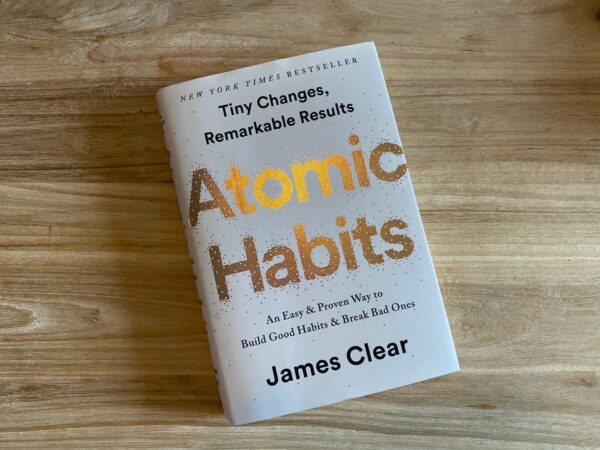
ATOMIC HABITS by James Clear — The 1% Rule That Changes Everything
Tiny changes. Remarkable results. The international bestseller that has sold over 15 million copies reveals the proven framework for building good habits, breaking bad ones, and mastering the compound power of small improvements — one atomic habit at a time.
The Surprising Power of Atomic Habits
James Clear opens with a profound personal story and a deceptively simple mathematical truth. This is where the book’s entire philosophy is planted.
On a warm June afternoon in 2002, fifteen-year-old James Clear was struck in the face by a baseball bat swung full-force by a teammate. He broke his nose, shattered several bones in his face, and suffered a traumatic brain injury so severe that he stopped breathing twice. By the time he arrived at the hospital, his pupils were unequal in size — a classic sign of brain damage.
Clear’s recovery was slow and grueling. He missed the remainder of his junior year. When he returned for senior year, he was placed on the junior varsity baseball team — not because of lack of skill, but because his body had deteriorated. That experience forged the question that would define his life’s work: How do you get back to your best? How do you build systems that make improvement automatic?
By the time Clear was in college, he had become deeply interested in the science of habit formation. He started small — going to bed at a consistent time, keeping his room clean. Then he stacked habits. By his senior year, he had been named to the ESPN Academic All-America Team. The transformation was not the result of one dramatic moment. It was the result of hundreds of small decisions made consistently over time.
The 1% Better Principle — The Mathematics of Tiny Gains
Clear introduces the most important calculation in the book: if you get 1% better every single day for one year, you will end up 37 times better by the time you are done. Conversely, if you get 1% worse each day for one year, you will decline nearly down to zero. Small habits don’t merely add up — they compound.
The most common mistake people make is focusing on goals rather than systems. Goals are the results you want to achieve. Systems are the processes that lead to those results. Winners and losers often have the same goals — the difference is that winners have better systems. If you want to improve your outcomes, forget about setting better goals. Focus on building better systems.
The Surprising Power of Tiny Changes
Why small habits make a big difference — and why the results are always delayed, not absent. The Plateau of Latent Potential explained.
Clear begins with one of the most powerful stories in the book: the British Cycling team. In 2003, when Dave Brailsford became the performance director of British Cycling, the team had been plagued by mediocrity for 96 years. No British cyclist had ever won the Tour de France.
Brailsford’s strategy was different from every coach before him. He called it the “aggregation of marginal gains” — the philosophy of searching for a 1% improvement in everything you do. He redesigned the team’s bike seats for comfort. He rubbed alcohol on the tires for better grip. He found the exact pillow that helped riders sleep better while traveling. He tested different massage gels to optimize muscle recovery. He even painted the inside of the team’s truck white so they could identify dust that could affect the bikes.
The results were staggering. Within five years, British cyclists won 60% of the gold medals at the 2008 Beijing Olympics. In the ten years that followed 2007, British cyclists won 178 world championships, 66 Olympic or Paralympic gold medals, and five Tour de France victories.
The Plateau of Latent Potential
This is the most psychologically important concept of Chapter 1. Clear explains why people give up on good habits prematurely: because change is not linear. When you begin a new habit, results don’t appear immediately. You seem to be making no progress. But underneath the surface, enormous potential is accumulating.
He uses the metaphor of ice melting: an ice cube sits in a room at 25°F. You raise the temperature to 27°F. Nothing happens. 29°F — still nothing. 31°F — still solid. And then at 32°F — the ice begins to melt. Every single degree of effort before 32°F was not wasted. It was building toward the breakthrough that happens all at once.
The Ice Cube Principle
Every habit you build is raising the temperature of your life, one degree at a time. The breakthrough comes — but only to those who don’t quit before 32°F. This is why most people abandon good habits: they stop right before the compounding begins.
How Your Identity Shapes Your Habits
The most important chapter in the book. Why identity-based habits beat outcome-based habits — and how to change who you believe you are.
Chapter 2 contains the single most powerful idea in Atomic Habits. Clear argues that there are three layers of behavior change. Most people focus on the wrong layer.
Layer 1 — Outcomes: This is about changing your results — losing weight, publishing a book, winning a championship. Most goals are set at this level.
Layer 2 — Processes: This is about changing your habits and systems — implementing a new workout routine, decluttering your desk for better focus, developing a meditation practice.
Layer 3 — Identity: This is about changing your beliefs — your worldview, your self-image, your judgments about yourself and others. Most people don’t even touch this layer.
Outcome-based habits start with what you want to achieve. Identity-based habits start with who you want to become. The direction is entirely different — and the results are dramatically different.
The Two-Step Process to Identity Change
Clear reveals that identity emerges from your habits — it is not fixed. Every action you take is a vote for the type of person you want to become. No single instance will transform your beliefs, but as the votes accumulate, so does the evidence of your new identity.
- Step 1: Decide the type of person you want to be
- Step 2: Prove it to yourself with small wins
The Identity Shift Question
Don’t ask “What do I want to achieve?” Ask instead: “Who is the person who could achieve that?” Then start becoming that person — one small vote at a time.
How to Build Better Habits in 4 Simple Steps
The science of the Habit Loop — cue, craving, response, reward — and how the brain automates behavior through neurological encoding.
Clear introduces the neurological framework that underpins every habit — and every bad habit — you have ever formed. Building on the work of psychologist B.F. Skinner and neuroscientist Ann Graybiel, he presents the four-stage model of habit formation: Cue → Craving → Response → Reward.
The cue triggers the brain to initiate behavior. Your brain is constantly scanning the environment for hints of where rewards are located. The craving is the motivational force behind every habit — you don’t crave the habit itself, you crave the change in state it delivers. The response is the actual habit you perform, which can be a thought or an action. The reward is the end goal of every habit — it satisfies the craving and teaches the brain which actions are worth remembering.
Together these four steps form a neurological feedback loop — the habit loop — that ultimately becomes automatic. The brain literally rewires itself to make the habit easier to repeat each time, reducing the mental effort required until the behavior is nearly unconscious.
The Four Laws of Behavior Change
The heart of Atomic Habits. Four laws to build good habits. Four inversions to break bad ones. The most actionable framework in behavioral science — made accessible for everyone.
Make It Obvious
The Habit Scorecard, Implementation Intentions, Habit Stacking, and the transformative power of environment design. Your environment is the invisible hand that shapes your behavior.
Chapter 4: The Man Who Didn’t Look Right
Clear opens with the story of a nurse who could tell a patient was about to have a heart attack before any tests confirmed it — based on unconscious pattern recognition trained through years of experience. This is habits operating at their highest level: nonconscious automaticity. The brain encodes so many behaviors that we are not even aware of running them.
This is why the first step to changing any habit is to become consciously aware of it. Clear introduces the Habit Scorecard — a simple tool where you list every behavior in your daily routine and rate it as positive (+), negative (−), or neutral (=). Awareness is the foundation of all change.
Chapter 5: Implementation Intentions
Research shows that people who make a specific plan for when and where they will perform a new habit are significantly more likely to follow through. The formula: “I will [BEHAVIOR] at [TIME] in [LOCATION].” This removes ambiguity and activates the cue automatically when the time and place arrives.
Chapter 6: Habit Stacking
Instead of pairing a habit with a time and place, habit stacking pairs it with a current habit. The formula: “After I [CURRENT HABIT], I will [NEW HABIT].” This leverages the existing neural network of established habits, dramatically reducing the effort required to remember the new behavior.
Examples: “After I pour my morning coffee, I will meditate for one minute.” “After I sit down at my desk, I will write my three most important tasks.” “After I close my laptop, I will go for a ten-minute walk.”
Chapter 7: The Secret Power of Environment
This chapter reveals one of the most underutilized strategies in behavior change: designing your physical environment to make good habits the default. Anne Thorndike, a Harvard physician, redesigned a hospital cafeteria to make water the most visible drink — and water sales rose by 25% without a single person being told to drink more water.
Design Your Environment for Success
“You don’t need willpower — you need a well-designed environment.” Put your running shoes by the door. Leave your guitar on a stand, not in a case. Put fruit on the counter, not in the fridge. Every visible cue is a behavioral invitation.
List every behavior you do each day. Rate each: + (effective), − (ineffective), = (neutral). No judgment — pure awareness. This reveals the patterns you are running on autopilot and gives you the data to design better systems.
“I will [BEHAVIOR] at [TIME] in [LOCATION].” Research shows this simple formula increases habit completion rates by up to 91%. The specificity removes the mental debate about whether or when to act.
“After I [CURRENT HABIT], I will [NEW HABIT].” Build a chain of behaviors anchored to existing automatic routines. The key is choosing the right anchor — a habit that is reliable, consistent, and closely related to the new behavior in frequency and context.
Clear recommends “one space, one use” — train in the gym, work at a desk, read on the sofa. Your brain associates behaviors with contexts. When you mix contexts, the dominant use wins. Protect your behavioral contexts fiercely.
Make It Attractive
Why dopamine drives behavior, the power of Temptation Bundling, the role of social influence, and how to reprogram your cravings using cause-and-effect reframing.
Chapter 8: The Dopamine-Driven Feedback Loop
Clear introduces neuroscience to explain why habits are so powerful. Dopamine — the brain’s primary pleasure chemical — is released not just when you experience a reward, but when you anticipate it. This is why craving drives behavior more than reward. The brain gets a surge of dopamine when you see the phone notification, not just when you open the app.
This is why habits must be made attractive — because the more attractive an opportunity is, the more likely it is to become habit-forming. The same principle explains why bad habits are so hard to break: they are engineered to be maximally dopaminergic by billion-dollar companies optimizing for your engagement.
Chapter 9: Temptation Bundling
The strategy: link an action you want to do with an action you need to do. Ronan Byrne — a student who wanted to watch Netflix but also needed to exercise — engineered his exercise bike to only allow Netflix streaming when he was actively pedaling. His craving for entertainment made exercise automatic.
The habit stacking + temptation bundling formula: “After [CURRENT HABIT], I will [HABIT I NEED]. After [HABIT I NEED], I will [HABIT I WANT].”
Chapter 10: The Role of Family and Friends
We don’t choose our earliest habits — they are absorbed from the people around us. We imitate the habits of three groups: the close (family and friends), the many (the tribe), and the powerful (those with status). This is why environment — especially social environment — is so powerful for behavior change.
Clear’s advice: join a culture where your desired behavior is the normal behavior, and where you already have something in common with the group. When belonging and behavior align, change becomes nearly effortless. You are surrounded by social proof that the habit is the default.
Chapter 11: How to Find and Fix the Causes of Bad Habits
Every craving is the brain trying to solve a problem — specifically, a desire to change your internal state. Stress makes you want to eat. Loneliness makes you crave scrolling social media. Boredom makes you want to watch TV. The bad habit is not the cause — it is the solution the brain found to an underlying need.
Reframe — Shift the Story
Instead of: “I have to work out.” Try: “I get to build my body and energy today.” Instead of: “I need to write.” Try: “I get to share my ideas with the world.” The cause and effect remain identical — but the motivational force shifts from burden to privilege.
| Underlying Motive | Bad Habit Solution | Good Habit Alternative |
|---|---|---|
| Reduce stress | Cigarettes, alcohol | Meditation, deep breathing |
| Relieve boredom | Social media scrolling | Reading, walking |
| Seek connection | Passive TV watching | Call a friend, join a group |
| Gain status | Impulse buying luxury items | Skill development, performance |
| Reduce uncertainty | Excessive planning/overthinking | Journaling, action bias |
Make It Easy
Motion vs. action, the law of least effort, the Two-Minute Rule, and commitment devices. Reduce friction and watch your good habits accelerate.
Chapter 12: Walk Slowly, But Never Backward
One of the most important distinctions in Atomic Habits: the difference between motion and action. Motion includes researching, planning, and strategizing — all things that feel productive but never produce a result on their own. Action is the behavior that produces an actual outcome.
We prefer motion because it lets us feel like we are making progress without risking failure. Motion is actually a form of procrastination. Clear’s principle: you don’t need to plan — you need to practice. Habit formation is driven by frequency, not time. The most important metric is how many times you repeat the behavior, not how long you spend on it.
Chapter 13: The Law of Least Effort
Human behavior follows the path of least resistance. This is not laziness — it is the biological reality of how the brain conserves energy. Clear reveals this as the master key to habit formation: design your environment so the good habit has LESS friction than the bad one.
He introduces the concept of environment priming — setting up your space in advance for the behavior you want to perform. Want to exercise in the morning? Sleep in your workout clothes. Want to eat healthier? Wash and pre-cut vegetables every Sunday. Want to read more? Put a book on your pillow. Reduce the steps between you and the good habit.
Chapter 14: The Two-Minute Rule
The most practically transformative idea in the book. When you start a new habit, it should take less than two minutes to do. “Read before bed each night” becomes “Read one page.” “Do yoga for thirty minutes” becomes “Take out my yoga mat.” “Study for my exam” becomes “Open my notes.”
The Two-Minute Rule is not about completing the habit in two minutes — it is about showing up. The ritual of beginning is the most critical part of any habit. Once you have started — once you have shown up — continuing is dramatically easier than starting. The Two-Minute Rule makes showing up the only goal.
Chapter 15: How to Make Good Habits Inevitable
Commitment devices — also called “Ulysses pacts” — are choices made in the present that lock in future behavior. Victor Hugo famously locked away all his clothes and asked his servant to hide them until he finished writing The Hunchback of Notre Dame. Removing the option of distraction made writing inevitable.
The Two-Minute Gateway
A habit must be established before it can be optimized. First, show up every day. Then, make it better. Standardize before you optimize. You can’t improve something that doesn’t exist yet.
Make It Satisfying — Advanced Tactics
Immediate rewards, habit tracking, never missing twice, the Goldilocks Rule, and the critical difference between professionals and amateurs.
Chapter 16: The Cardinal Rule of Behavior Change
Human brains evolved to prioritize immediate rewards over delayed ones — this is called time inconsistency. The consequences of bad habits are in the future (obesity, debt, disease). The rewards of bad habits are immediate (pleasure, relief, comfort). This is why bad habits are so hard to break.
The reverse is true for good habits: the costs are immediate (effort, discomfort, sacrifice) while the rewards are delayed (fitness, wealth, wisdom). The Cardinal Rule is: what is immediately rewarded is repeated; what is immediately punished is avoided. Your job is to create immediate satisfaction for good habits before the delayed rewards arrive.
Chapter 17: How to Stick with Good Habits Every Day
Habit tracking is one of the most powerful tools Clear introduces. When you track your habits, you create a visual record of your progress — and seeing that record activates an additional motivational layer. The streak becomes something you don’t want to break.
The “Never Miss Twice” rule is Clear’s most practical piece of advice for maintaining long-term habits. Missing once is an accident. Missing twice is the start of a new (bad) habit. The moment you miss — get back on track the very next day. What distinguishes top performers from average ones is not that they never fail; it is how quickly they recover.
Chapter 18: The Accountability Partner
The final piece of the 4th Law is adding a social cost to failure. A habit contract — a physical agreement (signed by you and an accountability partner) that states your habit commitment and the consequences of breaking it — dramatically increases follow-through. When someone else is watching, the immediate cost of failure rises significantly.
Chapter 19–20: The Goldilocks Rule & The Plateau of Mastery
The brain experiences peak motivation when working on tasks that are at the edge of current abilities — not too hard (overwhelming), not too easy (boring). This is the Goldilocks Rule. Design habits that challenge you just beyond your current comfort zone — 4% harder than your current level is the scientifically optimal zone for sustained engagement.
The final insight of the book: the difference between a professional and an amateur is that professionals stay on schedule while amateurs let life get in the way. The greatest threat to success is not failure — it is boredom. As habits become routine, they become less interesting. The professionals show up anyway. They fall in love with boredom.
Fall in Love with Boredom
“At some point, everyone who pursues excellence has to fall in love with boredom. The most successful people are not those who find a unique strategy. They are the ones who can handle the boredom of training every day.”
Track every habit completion on a calendar or app. Put an X on the day. Build the chain. The chain becomes its own reward — a visual streak you don’t want to break. “Don’t break the chain” is the most sustainable motivational system Clear identifies.
Write a formal agreement committing to your habit, specifying consequences for missing, and have an accountability partner sign it. Bryan Harris committed to losing weight with a $200 penalty for each missed workout — the social and financial cost made failure extremely unattractive.
Design habits that sit at the edge of your ability — challenging enough to engage, easy enough to succeed. Too hard → anxiety → quit. Too easy → boredom → quit. Just right → flow state → continue. Gradually increase difficulty as the habit becomes automatic.
Everyone misses a day. Champions miss a day and then come right back. Missing once is human. Missing twice is the start of a new identity. The rule is not “never fail” — it is “always recover immediately.” One bad day is never what destroys progress. A pattern of bad days is.
Small Habits.
Remarkable
Results.
James Clear closes Atomic Habits with a truth that is both humbling and empowering: success is not a destination — it is a direction. Each day, the question is not “Did I achieve my goal today?” but “Did I cast enough votes for the person I am becoming?” The goal was never to win the game once — it was to become the type of person who wins the game consistently.
The system Clear has built — the Four Laws of Behavior Change, the Habit Loop, Identity-Based Habits, the Two-Minute Rule, Habit Stacking, Environment Design, Temptation Bundling, Habit Tracking, and the Goldilocks Rule — is not a collection of tips. It is a comprehensive operating system for human behavior. Apply one law and your life improves. Apply all four and your life transforms.
The final and most important lesson of Atomic Habits: you do not need to be extraordinary to build extraordinary habits. You simply need to be 1% better today than you were yesterday. Do that consistently — and the mathematics of compounding will do the rest.
You fall to the level of your systems.
Build better systems. Become a better you.”